
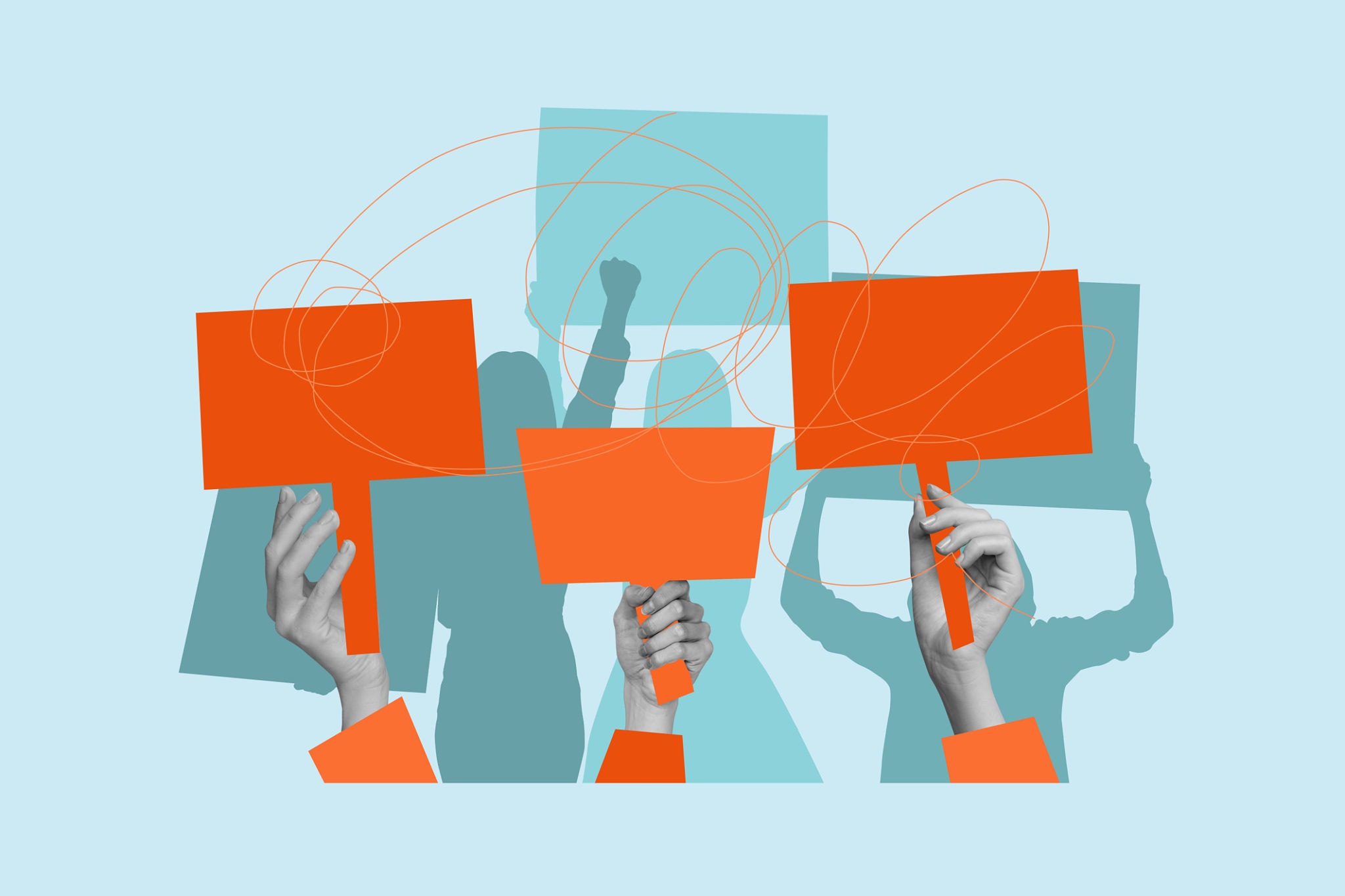
Gender is not something we are born with fully formed. It is something we are taught — through language, images, institutions, and the quiet pressure of everyday expectation. Understanding gender as a social and cultural construction does not diminish its reality. It reveals how deeply it shapes the way we move through the world, and how art has long been one of the most powerful tools for questioning what we have been told is natural.
The sociologist Judith Butler argued that gender is not a fixed identity but a performance — a set of repeated acts that, over time, come to feel natural and inevitable. We do not simply have a gender; we do gender, every day, through the choices we make, the roles we inhabit, and the expectations we either meet or resist. This insight, developed across decades of feminist and queer theory, has transformed how scholars, artists, and activists understand identity(Morgenroth T, 2018).
But gender as performance is not the same as gender as choice. The script is written long before we arrive on stage. From the color of a nursery to the toys in a child's hands, from the language used to praise a girl versus a boy, from the careers considered appropriate to the emotions considered acceptable — the construction of gender begins early and runs deep. Gender is also learned in culture, in schools, and in society itself.
What does it mean to construct gender?
The distinction between sex and gender — between biological characteristics and the social meanings attached to them — was central to feminism and remains foundational to gender studies today. Gender, in this framework, is a system of meaning: a set of ideas about what men and women are, what they should want, how they should behave, and what they are worth.
These meanings vary across cultures and across time. What counts as masculine in one society or culture may be looked upon as feminine in another. What was expected of women in one century would be unrecognizable to women in the next. This variability is itself evidence that gender is constructed — that it is made, not given. And what is made can be unmade, or remade differently.
Intersectionality, a concept developed by legal scholar Kimberlé Crenshaw(Samie, 2026), adds a further layer of complexity. Gender does not operate in isolation. It intersects with race, class, sexuality, disability, and nationality to produce experiences that cannot be reduced to any single axis of identity. A Black woman's experience of gender is not simply a woman's experience plus a Black person's experience — it is something distinct, shaped by the specific intersection of those identities within systems of power.
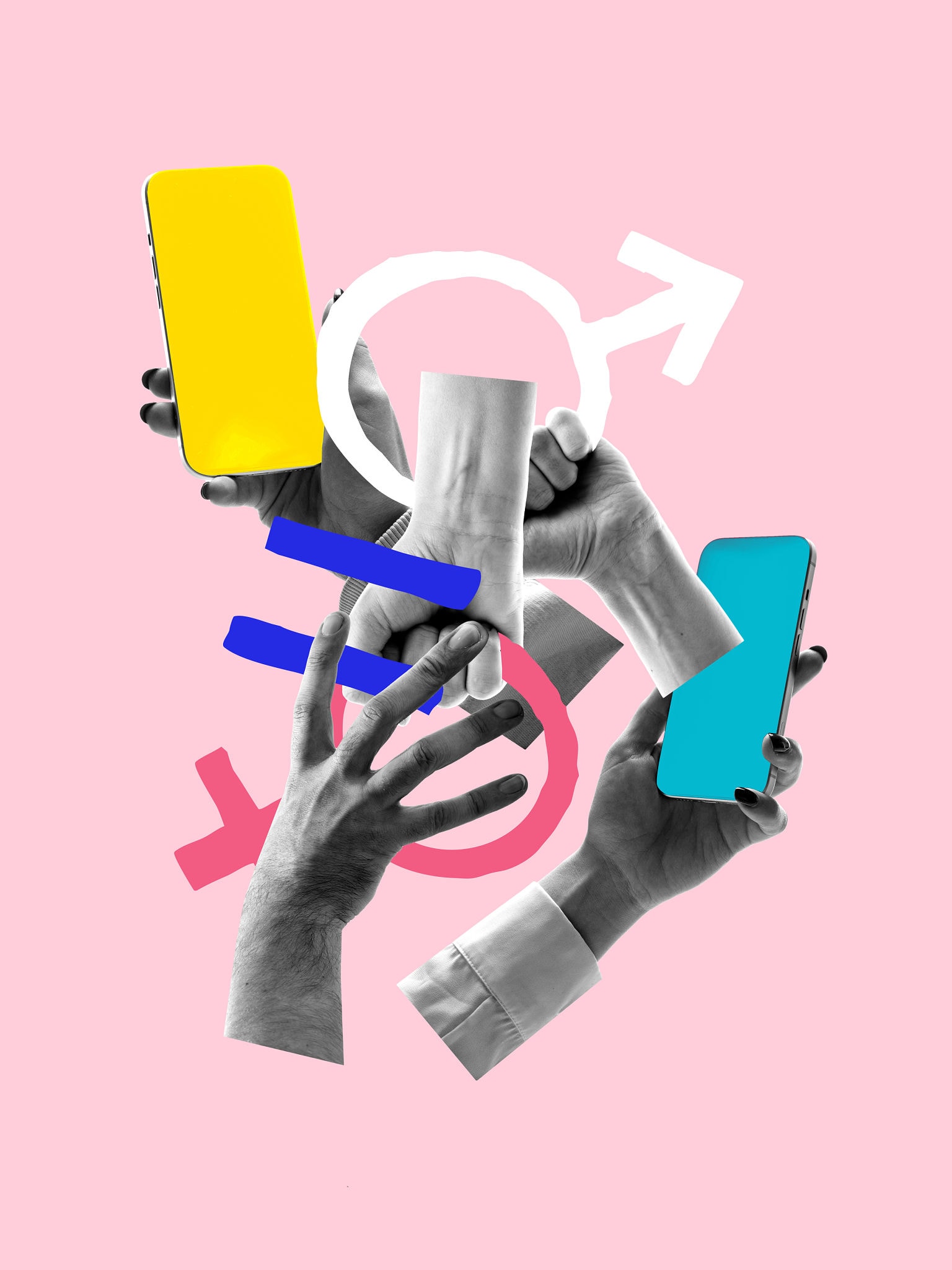
How gender norms are enforced
Gender norms are enforced through a range of mechanisms, some overt and some so subtle they are almost invisible. Institutions play a central role: schools, religious organisations, legal systems, and workplaces all encode expectations about gender into their structures and practices. A curriculum that centres male achievement, a legal system that historically denied women property rights, a workplace that penalises women for assertiveness while rewarding it in men — these are not accidents. They are the architecture of a gendered world.
Media and popular culture are equally powerful. Advertising tells us what bodies should look like, what desires are legitimate, and what roles are available to us. Film and television have historically confined women to supporting roles — the wife, the mother, the love interest — while centering on male protagonists as the agents of history. When these representations are repeated across decades and across platforms, they do not merely reflect reality. They help to produce it.
Social enforcement is perhaps the most immediate. The raised eyebrow, the cutting remark, the withdrawal of approval — these everyday corrections remind us of the cost of deviation. Boys who cry too much, girls who are too loud, people whose gender expression does not conform to expectation: all face a spectrum of social pressure designed to bring them back into line. In more extreme cases, that pressure becomes violence.
Art does not merely reflect the world as it is. It imagines the world as it could be.
Art as a site of resistance
Art has always been a space where the rules can be questioned. Because art operates through image, metaphor, and narrative rather than argument alone, it can reach places that theory cannot. It can make visible what has been rendered invisible. It can give form to experiences that have been dismissed or denied. And it can imagine alternatives to the world as it currently exists.
The feminist art movement of the 1970s was a turning point. Artists like Judy Chicago, Miriam Schapiro, and Adrian Piper challenged the male-dominated art world and the gendered assumptions embedded within it. They insisted that women's experiences — domestic labour, the body, sexuality, violence — were legitimate subjects for serious art. In doing so, they did not simply add women to the canon. They questioned the canon itself.
Contemporary artists continue this work. They explore gender fluidity, trans identity, the politics of beauty, and the relationship between the body and power. They use photography, performance, textile, and digital media to ask who gets to be seen, on whose terms, and to what end. Studying this work is not merely an aesthetic exercise. It is a way of understanding how power operates and how it can be resisted.
Faith Ringgold and We Came to America
About the work
We Came to America (1997) by Faith Ringgold. Oil on canvas. Ringgold is also known for her story quilts — narrative works that combine painting, quilted fabric, and written text, challenging the boundary between fine art and domestic craft.
Faith Ringgold is one of the most important American artists of the twentieth and twenty-first centuries. Born in Harlem in 1930, she developed a practice that wove together painting, quilting, storytelling, and activism — refusing the boundaries between fine art and craft, between the personal and the political, between the visual and the literary.
We Came to America, painted in 1997, is among her most celebrated works. The painting depicts a group of diverse figures — men, women, and children of different races and backgrounds — arriving on a shore, their arms raised in a gesture that holds both triumph and anguish. The title is deliberately ambiguous. America was a destination for some who came by choice, seeking freedom and opportunity. For others — enslaved Africans, indentured laborers, refugees — arrival was not a choice at all. Ringgold holds both truths simultaneously.
The work speaks directly to questions of gender and race as intersecting constructions. The women in the painting are not passive figures. They are present, embodied, and central to the narrative. Ringgold's use of the quilt form — a medium historically associated with women's domestic labour and dismissed by the fine art establishment — is itself a political act. By elevating the quilt to the status of high art, she challenges the gendered hierarchies that have long determined what counts as serious creative work.
Ringgold's practice as a whole insists that Black women's stories belong at the centre of American history and American art. In doing so, she does not simply represent an experience that has been marginalised. She transforms the terms on which that experience is understood — and in doing so, she transforms our understanding of America itself.
Why it matters now
The study of gender and art is not a niche academic pursuit. It is a way of developing the critical tools needed to understand the world we live in. When we learn to read an image — to ask who made it, for whom, under what conditions, and to what effect — we become more capable of questioning the representations that surround us every day. We become less susceptible to the stories that power tells about itself.
Gender norms cause real harm. They constrain the lives of women and girls. They damage men who cannot meet impossible standards of strength. They make life dangerous for people whose gender identity does not conform to binary expectations. Understanding how those norms are constructed and enforced is the first step toward dismantling them.
Art does not merely reflect the world as it is. It imagines the world as it could be. In the work of Faith Ringgold and the many artists who have followed in her tradition, we find not only a record of struggle but a vision of something better — a world in which all bodies are seen, all stories are told, and all people are free to be fully themselves. Design Statement - As I was writing this blog post, I consulted Google for further research to make sure I understood terms and to look more into gender roles. I felt it was important to look into how the art world looks at and affects gender and what the scholars had to say about gender itself. I looked up words and phrases, as well as other female artists, such as Judy Chicago, Miriam Schapiro, and Adrian Piper. I wanted the post to sound professional and well done, and I also used the glossary in week 1 of this week's readings. But I think looking into things and doing further research helps me put my ideas down on paper a little better and get a handle on gender, sexuality, and the art world itself. I also used Google to help me understand terms and those in the feminist circles, as well as artists. Morgenroth T, R. M. (2018). Gender Trouble in Social Psychology: How Can Butler's Work Inform Experimental Social Psychologists' Conceptualization of Gender? Front Psychol. doi:10.3389/fpsyg.2018.01320 https://pmc.ncbi.nlm.nih.gov/articles/PMC6072877/ Samie, A. (2026, July 29). intersectionality. Retrieved from Britannica: https://www.britannica.com/topic/intersectionality