
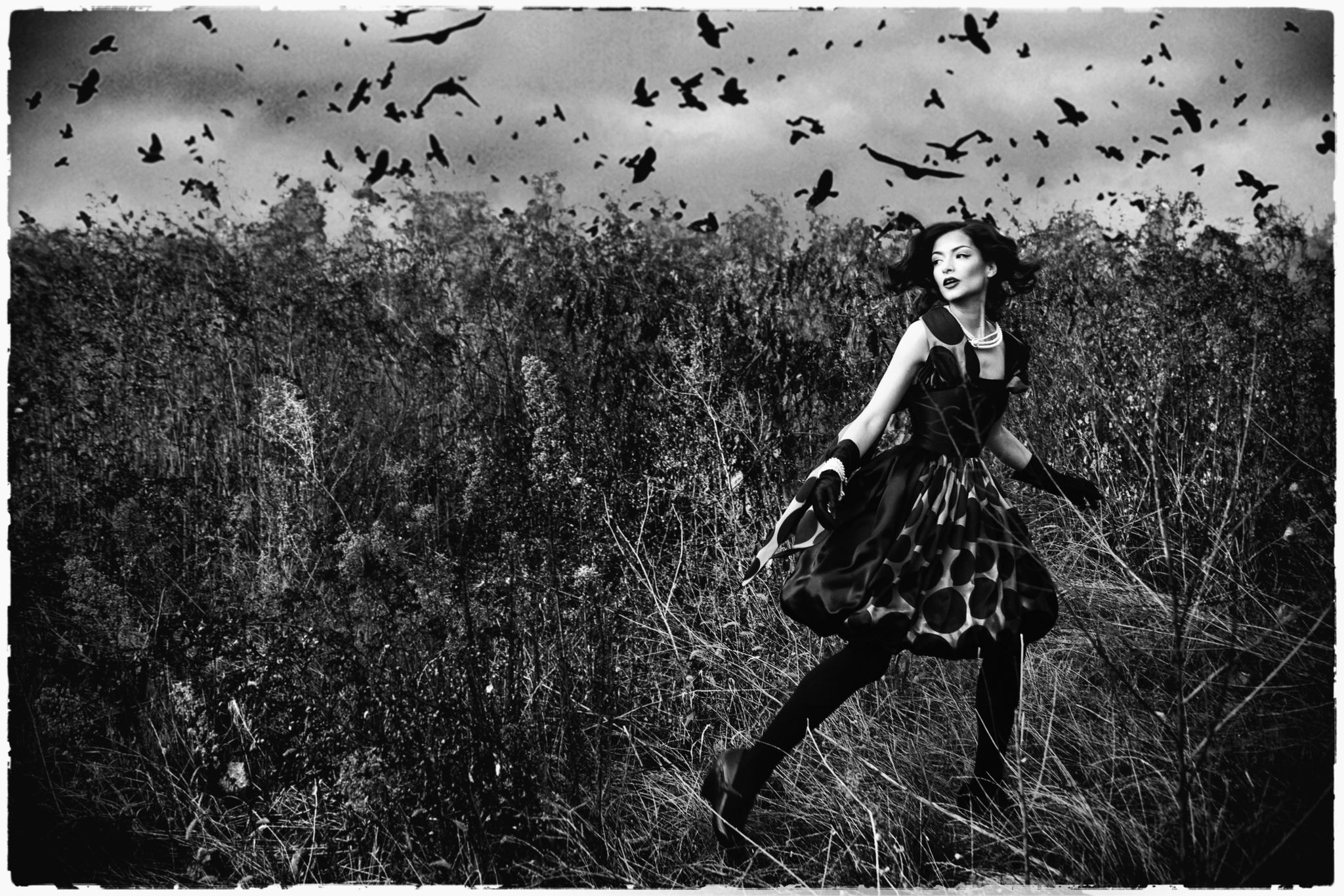
A personal reflection on the article 'Who Is Looking? The Male Gaze, Hitchcock, and the Cinema of Control' — what drew me to the subject, what the research revealed, and why the question of who is looking still matters fifty years after Laura Mulvey first asked it.
This article grew out of a simple but unsettling question: when we watch a film, whose eyes are we really seeing through? Laura Mulvey's 1975 essay 'Visual Pleasure and Narrative Cinema' gave that question a name — the male gaze — and Alfred Hitchcock's work gave it a face. No director in the history of Hollywood cinema made the act of looking more central to his storytelling, or more troubling, than Hitchcock. His films do not just contain voyeurism; they are built from it.
What drew me to this subject was the way Hitchcock implicates the audience. In Rear Window, we are not watching a voyeur from a safe critical distance — we are the voyeur. Hitchcock seats us behind Jeff's telephoto lens and invites us to enjoy exactly what the film is supposed to make us question. In Vertigo, the camera's fetishistic attention to Kim Novak's transformation into Madeleine is not incidental to the story; it is the story. The film shows us, in slow and uncomfortable detail, what it looks like when a woman is remade entirely in the image of a man's desire.
Mulvey's framework — scopophilia, narcissistic identification, the three looks of camera, character, and spectator — provides the critical language to name what Hitchcock's films perform so fluently. But the article also tries to hold space for the complications: Kim Novak's Judy, who knows what is being done to her and grieves it; the moments where the gaze is made so visible that it begins to critique itself. Hitchcock was not a feminist filmmaker, but he was an honest one. He showed us the cinema of control and left us to decide what we thought of it.
Fifty years after Mulvey's essay, the male gaze is no longer a specialist term — it has entered everyday conversation about film, advertising, social media, and the way women are seen in public life. This article is an attempt to return to the source: to read Mulvey carefully, to watch Hitchcock closely, and to ask what it still means to ask who is looking — and who is being looked at.
Read the full article
Who Is Looking? The Male Gaze, Hitchcock, and the Cinema of Control