
In 1979, Sherrie Levine created a series of collages that use recognizable silhouettes of U.S. presidents such as Lincoln, Washington, and Kennedy. Cut from wallpaper and children's books and placed against flat, colored backgrounds. The works are actually very simple in nature. Yet with Levine, these pictures and silhouettes have an enormous cultural impact on how we see our society. They are Americans of great power and masculinity, and have spoken about freedom for all, and Levine places them in a context that quietly asks: who gets to be remembered, and who decides? (Crimp, 1977).
Currency, capital, and the male gaze
Looking at Sherrie Levine's work, especially her President Collages (1979), is intricate in the way it shows how hidden themes such as freedom, liberation, and autonomy for women can be. The presidential silhouettes she uses are cut from the currency we use every day — the coins and notes that pass through every hand in America. This creates a direct link between financial capital and the male gaze. It emphasises how women's sexuality is used, bought, and sold. The everyday money in our pockets is funding a lifestyle in which women are objectified.
There is also a profound irony at the heart of the work. The presidents whose profiles appear on currency — Washington, Lincoln, Kennedy — are figures celebrated in American history as champions of freedom and independence. And yet Levine uses their images to do the opposite: to show how those same symbols of liberty are being used to bind women and keep them from full autonomy. The men who fought for freedom are, in Levine's collages, the very shapes that contain and constrain.
The illusion of freedom: class, gender, and the trapped woman
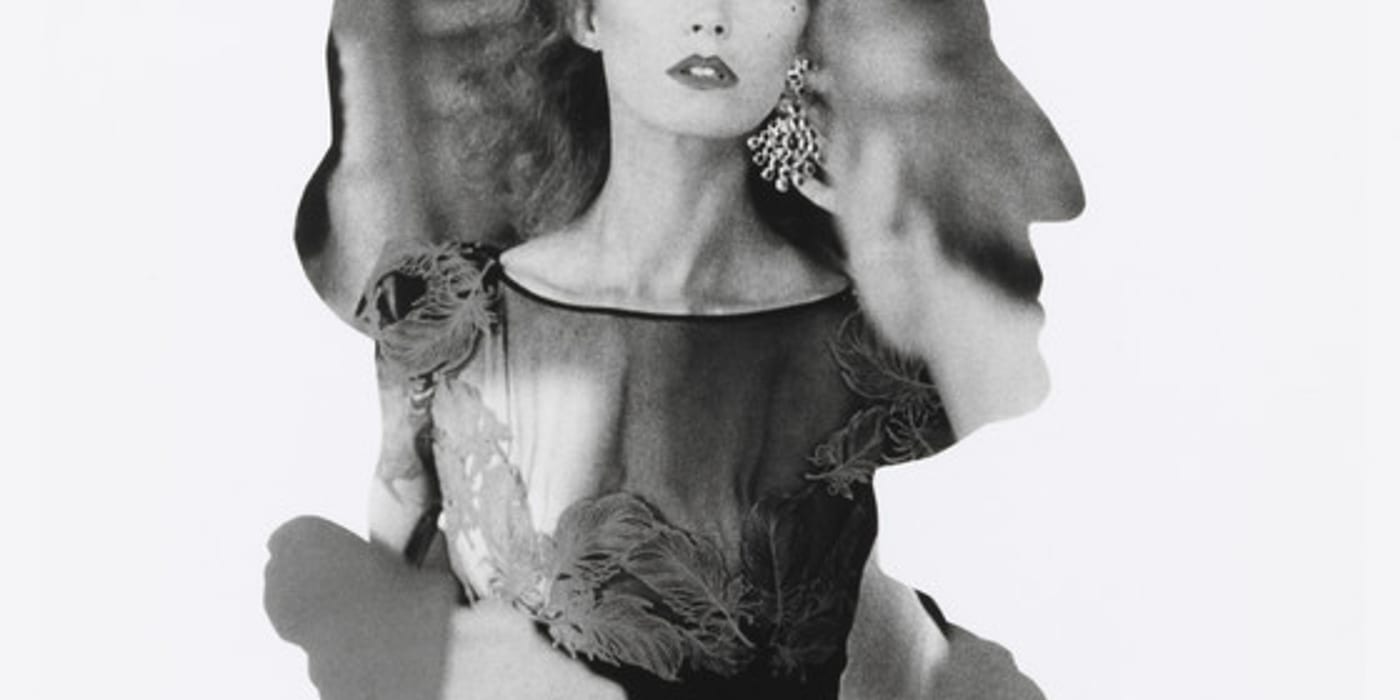
There are two distinct things going on in these collages: class and gender. If you look at the pictures carefully, you can see that the women in the photographs look empowered — glamorous, self-possessed, commanding attention. But Levine does something we may not be aware of at first. She cuts those pictures into the silhouettes of the presidents — Washington, Lincoln — and on closer inspection, the women who looked free are now trapped inside the outline. The empowered woman is simply an illusion. An illusion trapped in a patriarchal world, where powerful men rule.
Freedom, in this reading, is blocked by money and power. But are women really free? It would appear not. Women still seem trapped under a monetary and patriarchal system in which sex, and especially women, are easily bought and sold. The collage form makes this visible in a way that a painting or photograph alone could not: the act of cutting — of literally shaping one image to fit inside another — enacts the very process of containment that Levine is critiquing (Crimp, 1977). *Sherrie Levine also does something else that also takes on the patriarchy, the idea of authorship and originality. In this way, Levine takes control of the authorship and sends that power directly to the individual viewing it. Levine copies work on purpose. She is deliberately showing that the idea of the art being owned is not true, but that it can be used ty all to speak to the language of art (Barthes,1967).
Appropriation as feminist strategy
Levine belongs to a generation of artists — working in New York in the late 1970s and early 1980s — who used appropriation as a critical method. Alongside artists such as Barbara Kruger, Richard Prince, and Cindy Sherman, she was associated with what critics came to call the Pictures Generation: a loose grouping of artists who interrogated the power of images by re-using, re-framing, and re-presenting them (Crimp, 1977). Where Prince re-photographed advertising cowboys and Kruger overlaid found images with confrontational text, Levine worked with the image itself — lifting it wholesale from its original context and placing it somewhere new.
By taking the silhouettes of presidents — images so familiar they have become almost invisible, absorbed into the visual wallpaper of American life — and presenting them as art objects, Levine makes the familiar strange. She forces the viewer to look again at images they thought they already understood. What does it mean that the faces of power are almost exclusively male? What does it mean that these profiles have been reproduced so many times, on coins and stamps and classroom walls, that they have ceased to be images of real men and have become symbols — of authority, of history, of the nation itself? Roland Barthes' concept of the 'death of the author' is relevant here: once an image enters circulation, its original meaning is no longer controlled by its maker (Barthes, 1967). Levine exploits this instability, redirecting images whose meanings have calcified into something new and unsettling.
The male gaze and the silhouette as prison
You can also look at this through the male gaze. In the silhouettes, women are placed there as objects to be looked at, to be domesticated, and to be conformed. Freedom is an illusion. Women are more or less kept as prisoners in a male-dominated society — so besides sexuality, you are also looking at gender. The viewer is looking at something they believed they already understood. The faces of the silhouettes are all powerful males, and the woman is there, trapped inside.
The silhouettes function as symbols of both societal and institutional power. The male gaze is there to objectify: women are reduced to objects of visual pleasure that can be bought and sold. The work illustrates two things very well — Laura Mulvey's concept of the male gaze (Mulvey, 1975) and John Berger's observation that 'men act and women appear' (Berger, 1972). Levine is making a direct connection between money and the patriarchal system. The currency that funds everyday life is the same currency that funds the objectification of women.
Luce Irigaray's analysis of how women are positioned within patriarchal systems of exchange is also relevant here (Irigaray, 1985). For Irigaray, women under patriarchy function as commodities — objects that circulate between men, whose value is determined by male desire rather than by themselves. Levine's collages make this logic visible and literal: the woman's image is cut to fit the shape of male power, her form determined by the outline of the president's profile. She does not escape the frame; she is the frame's content.
Design statement
I found Levine's work quite fascinating. At first it's hard to understand, but as you dive deeper and look closer, it begins to make sense. It is a combination of everything we have been studying and going over in class. It looks at women and the patriarchal system, and no matter what, they are still trapped — not fully free at all. It's really all an illusion.
References
Barthes, R. (1967). The death of the author. Aspen, 5–6.
Berger, J. (1972). Ways of seeing. Penguin Books.
Crimp, D. (1977). Pictures. October, 8, 75–88.
Irigaray, L. (1985). This sex which is not one (C. Porter, Trans.). Cornell University Press. (Original work published 1977)
Mulvey, L. (1975). Visual pleasure and narrative cinema. Screen, 16(3), 6–18. https://doi.org/10.1093/screen/16.3.6